English-speaking clinics in Kyoto & Namba — open every day
Back to all articles

Blog

Health Guide for Travelers in Japan: What Risks Are Real?

Published
Travel Health Guide

Which health risks in Japan are real — heatstroke, raw food, seasonal viruses — and which you can relax about. A doctor's guide for travelers, with prevention tips.
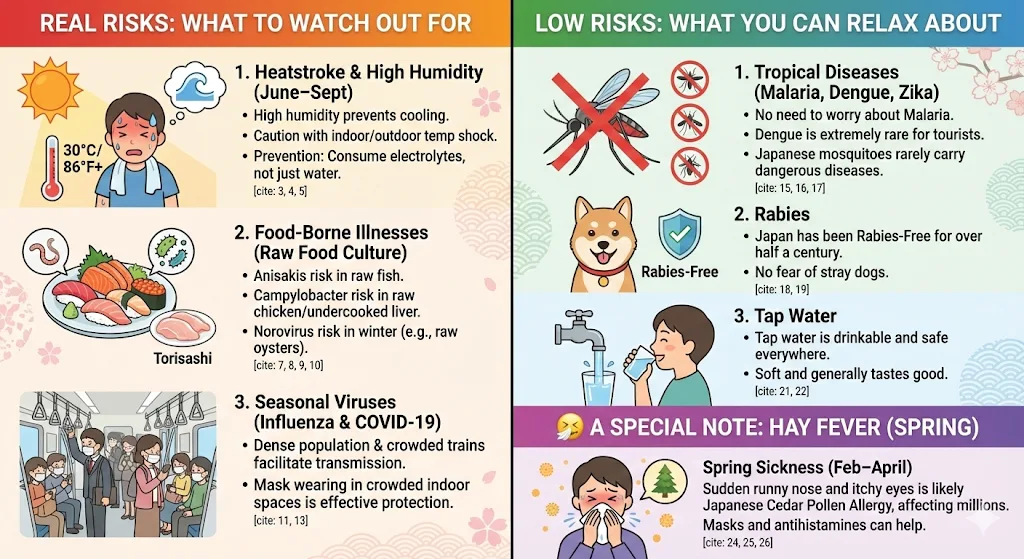
Infographic contrasting real health risks for travelers in Japan — heatstroke, food-borne illness, seasonal viruses — with low risks such as tropical diseases, rabies and tap water

Japan is widely known for its hygiene, cleanliness, and advanced healthcare system. Generally, it is one of the safest destinations in the world. However, the unique climate and food culture present specific health risks that differ from those in Europe, North America, or other parts of Asia.

To enjoy your trip without interruption, here is a guide on what you should watch out for and what you don’t need to worry about.

⚠️ The Real Risks: What to Watch Out For

1. The “Hidden” Danger: Heatstroke & High Humidity

If you visit Japan between June and September, do not underestimate the heat. Many travelers look at the thermometer (e.g., 30°C / 86°F) and think, “I can handle this.” This is a mistake.

  • The Humidity Factor: Japan’s summer is extremely humid. Sweat does not evaporate easily, meaning your body cannot cool itself down efficiently.
  • The “Indoor-Outdoor” Shock: Moving between the scorching heat outside and powerful air conditioning inside trains and shops can disrupt your autonomic nervous system, leading to “summer fatigue.”
  • Prevention: Water is not enough. You must consume electrolytes (salt and minerals). Vending machines sell sports drinks like Pocari Sweat or Aquarius — buy them before you feel thirsty.

2. Food-Borne Illnesses (Raw Food Culture)

Japan is famous for sushi and sashimi. While generally safe due to high hygiene standards, the risk is never zero.

  • Anisakis: A parasite found in raw fish (mackerel, squid, salmon). While fresh sushi restaurants manage this well, be cautious if you catch fish yourself or buy from non-specialized vendors.
  • Campylobacter: In Japan, you may encounter “torisashi” (chicken sashimi) or slightly undercooked liver in izakayas. Unlike in many Western countries, this is a delicacy here, but it carries a risk of bacterial infection. If you have a sensitive stomach, request your meat well-done.
  • Norovirus: Prevalent in winter. Be careful with raw oysters during the winter months.

3. Seasonal Viruses (Influenza & COVID-19)

Japan is densely populated. Trains and stations are crowded, making the transmission of respiratory viruses easier.

  • Mask Culture: You will see many locals wearing masks. This is not always because they are sick; many wear them for prevention or hay fever. Wearing a mask in crowded indoor spaces is a socially accepted and effective way to protect yourself.

✅ The Low Risks: What You Can Relax About

1. Tropical Diseases (Malaria, Dengue, Zika)

Unlike many other Asian destinations, you do not need to worry about malaria in Japan.

  • Mosquitoes: While Japanese mosquitoes are annoying and cause itchy bites, they rarely carry dangerous tropical diseases. You do not need antimalarial medication.
  • Dengue Fever: There have been extremely rare, isolated local cases in the past (parks in Tokyo), but it is not considered an active risk for tourists.

2. Rabies

Japan is one of the few countries in the world that has been rabies-free for over half a century.

  • You do not need to fear stray dogs. In fact, you will rarely see them. If you are bitten by a domestic dog or cat, basic wound care is usually sufficient, though you should consult a doctor if the wound is deep.

3. Tap Water

Japan’s tap water is drinkable and safe everywhere.

  • You do not need to buy bottled water for brushing your teeth or drinking. It is soft water and generally tastes good.

🤧 A Special Note: “Spring Sickness” (Hay Fever)

If you visit between February and April and suddenly develop a runny nose and itchy eyes, you probably haven’t caught a cold. You likely have Japanese cedar pollen allergy (hay fever). This affects millions of people in Japan. High-quality masks and antihistamines are available at drugstores to help you cope. For severe symptoms, see our guide to spring allergies in Japan.

If You Do Get Sick…

Even with the best precautions, travel can be unpredictable.

  • Stomach pain from unfamiliar food?
  • Sudden fever or heatstroke symptoms?
  • Running out of your regular medication?

If you feel unwell during your trip, please consult with Dr. Coming International Clinic — at Kyoto Station or at Namba, Osaka. We understand the specific health challenges travelers face in Japan. Whether it is an acute infection, heat exhaustion, or a need for chronic medication refills, we provide accessible care to help you get back to enjoying your trip.

  1. Private ED Treatment in Japan for Travelers and Residents
  2. GLP-1 Weight Management in Japan: How Our Self-Paid Program Works
  3. Need a Doctor Near Namba Station? Direct Access from Exit 6